 (Image via
Children often find money matters dull, but you can turn financial lessons into an engaging part of everyday life. Create a sense of discovery by making allowance, spending, and saving part of your family’s regular routines. Invite kids to talk about prices or choices during breakfast, or while picking out items on a grocery trip. Encourage them to compare two different brands of cereal, discussing out loud what makes one more appealing than the other. By letting kids take the lead in these small decisions, you help them build confidence and start to understand real-world money skills in a fun and memorable way.
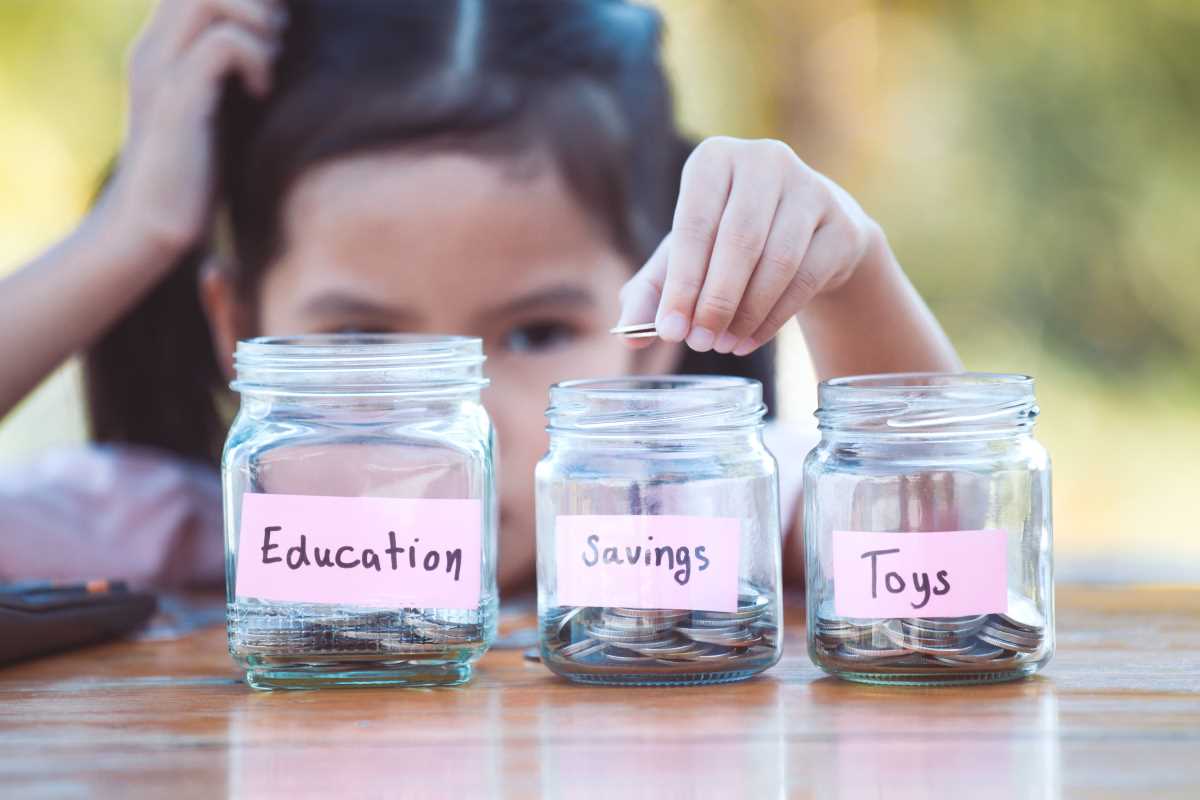
Next, lean into their natural drive to collect and showcase. Use clear jars, charts decorated with stickers, or even a simple chalkboard tally on the fridge. When balance updates happen in real time, kids connect their actions—choosing chores or selling old toys—with visible progress. From there, you’ll see them brainstorming creative ways to earn bonuses, vying for that next star or shiny coin. Suddenly, Family Financial Planning becomes a series of micro-victories everyone celebrates.
Making Money Matters Fun Through Play
Turn everyday money decisions into playful missions. Invite kids to a “store simulation” at home, where they use pretend money to buy or barter old items. Once they complete a purchase, switch roles so they serve as the cashier, calculate change, and tally earnings. That role rotation helps them practice arithmetic and develop money sense without feeling like homework.
Create themed treasure hunts that require solving simple price puzzles. Hide envelopes labeled with grocery items and price tags around the house. Each clue leads to the next and challenges children to compute totals, compare savings, and figure out which digits go where. They’ll dash from room to room, eager to crack the next price code.
Practical Tools for Young Savers
- Savings Jars Setup
- Tool category: Visual saver organizer
- Purpose: Show real-time growth of funds with clear separation (spend, save, share).
- Step-by-step:
- Gather three identical jars and label them.
- Decide on initial allowance split ratios.
- Drop coins or bills in jars and update chalk labels each time.
- Review totals weekly as a family.
- Cost: Under $10 for jars and labels at discount stores.
- Insider tip: Decorate jars together so kids feel ownership and stay motivated to fill each one.
- Reward Chart Stickers
- Tool category: Goal-tracking board
- Purpose: Link chores or savings milestones to colorful incentives.
- Step-by-step:
- Create a chart grid with daily tasks and savings goals.
- Assign sticker values (for example, 1 sticker equals $0.25).
- Let children place a sticker when they complete a chore or deposit money.
- Count stickers at week’s end to determine bonus coins.
- Cost: $5–$8 for a sticker pack and foam board.
- Insider tip: Swap some stickers for small privileges like choosing dinner to keep excitement high.
- Digital Piggy Bank App
- Tool category: Mobile savings tracker
- Purpose: Connect technology interest with money awareness by showing a virtual coin balance.
- Step-by-step:
- Download a free kids’ banking app.
- Create a child account with viewing-only access.
- Link to a parent account for allowance transfers.
- Review progress together and set automated saving goals.
- Cost: Free basic version with optional ~$3 monthly premium.
- Insider tip: Enable push notifications that chime whenever a deposit lands, turning each allowance into a mini celebration.
- Price Comparison Game
- Tool category: Scavenger hunt script
- Purpose: Teach comparison shopping during real outings.
- Step-by-step:
- Print two grocery items’ price labels.
- Hand them to your child with a simple calculator.
- Ask them to find both items and compute per-unit cost.
- Let them announce the best deal to the group.
- Cost: Zero beyond a regular shopping trip.
- Insider tip: Reward accurate results with a sticker on their personal money plan wall to reinforce confidence.
- Lunch Money Ledger
- Tool category: Simple budget journal
- Purpose: Log daily spending and savings from school cafeteria visits.
- Step-by-step:
- Provide a small spiral notebook.
- Teach headings: date, item bought, price, savings left.
- Encourage jotting down each purchase at day’s end.
- Review monthly totals and set new targets.
- Cost: Under $4 for a notebook and pen.
- Insider tip: Let kids choose fun pens or colored markers to make each entry feel special.
Turning Goals into Games
Frame saving targets as levels in a video game. If your child needs to save $20 for a desired toy, split that into four “boss battles” of $5 each. Each time they reach $5, they earn a badge, digital trophy, or family high-five before unlocking the next level. This approach taps into their love of unlocking achievements and provides clear checkpoints.
Introduce “challenge cards,” each with small missions like “Add $2 to your savings jar by next Tuesday” or “List three ways to earn allowance extras.” Kids draw cards randomly, turning routine deposits into surprise quests. When they finish, they share their challenge victories at the dinner table, often sparking new ideas to boost earnings.
Making Chores a Learning Opportunity
Instead of lumping chores under one allowance umbrella, assign micro-payments per task with scaled rates. Washing dishes might net $0.50 per plate, while vacuuming halls could earn $1. List tasks with rates on a whiteboard so kids pick roles that match their energy and interest. Allow them to negotiate occasional bonuses for extra effort, then help them calculate the new sheet total before writing it down.
Encourage siblings to work together on bigger chores like yard work, splitting the payout fairly after they tally their hours. That teaches both teamwork and fair share calculations. When payday arrives, children review logs and verify figures, strengthening accountability and basic math skills.
Maintaining Momentum with Family Traditions
Designate “Finance Fridays” where you review allowance, savings, and upcoming goals together. Gather around snacks, share wins, and brainstorm new ways to fund next month’s pizza night or movie outing. This weekly ritual becomes something they look forward to rather than dread, wrapping financial check-ins in fun.
Celebrate milestone moments—first $10 saved, first chore chain completed—by snapping a proud photo on a custom “Money Milestone” board. Hang each snapshot in a common area, creating a gallery of financial trophies that sparks conversations among visiting relatives and builds genuine pride in young savers.
By adding creativity, transparency, and friendly competition, families can make financial lessons engaging and memorable. Using these playful methods, kids will enjoy learning about money and celebrating their progress.